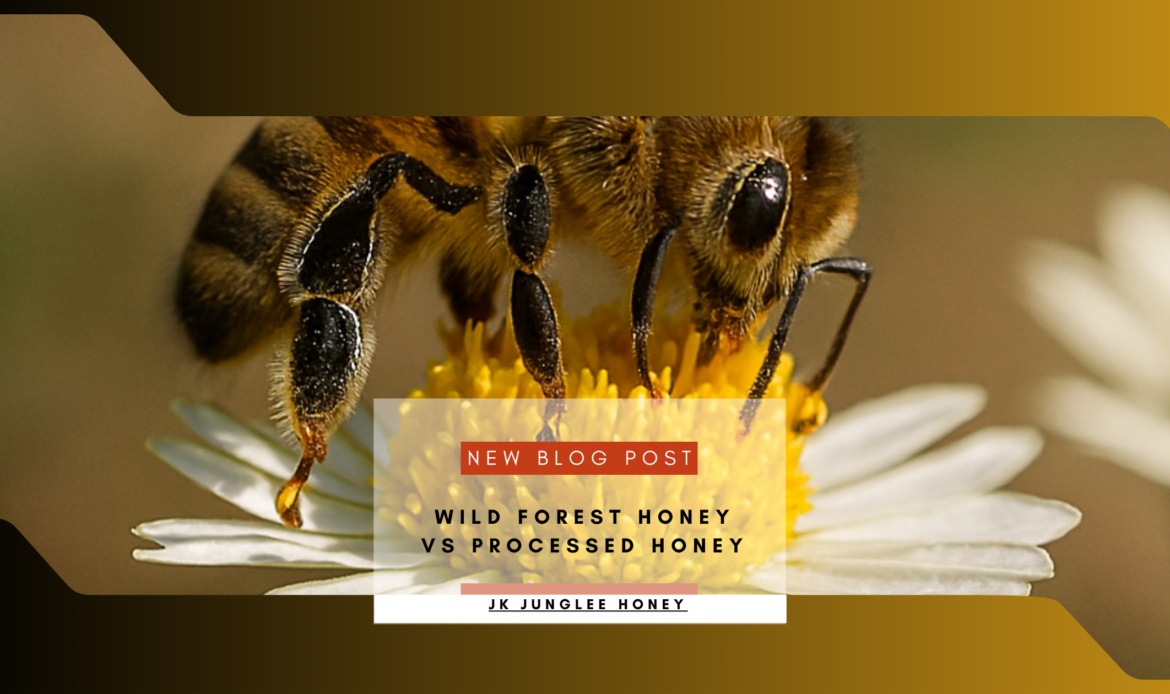
Discover the difference between wild forest honey and processed honey. Learn how sourcing, testing, and purity define real honey quality.
Today, most honey available in the market is processed, blended, and sourced from unknown places. However, wild forest honey follows a completely different path. It comes from specific locations, collected directly from nature without shortcuts.Understanding the difference between these two types of honey helps you make a more informed and conscious choice.
Processed honey is often collected from multiple unknown sources. It is heated, filtered, and blended before being packed.
Because of this process:
- Natural enzymes may be reduced.
- Original taste gets altered.
- Source transparency is lost.
Wild forest honey is collected directly from forests, valleys, and natural ecosystems. Each batch comes from a specific location and community, ensuring authenticity.
Unlike processed honey:
- It is not overheated.
- It is minimally filtered.
- It retains its natural structure
Most commercial honey does not clearly mention where it comes from. In contrast, wild forest honey is sourced directly from known regions such as forests, hillsides, and valleys.
This direct sourcing ensures:
- No middlemen involvement.
- Clear origin traceability.
- Fair pricing for harvesters.
Every batch of high-quality honey should be tested independently. Advanced testing methods like NMR help detect:
- Adulteration.
- Sugar syrups.
- False origin claims.
If a batch does not pass testing, it should not be sold.