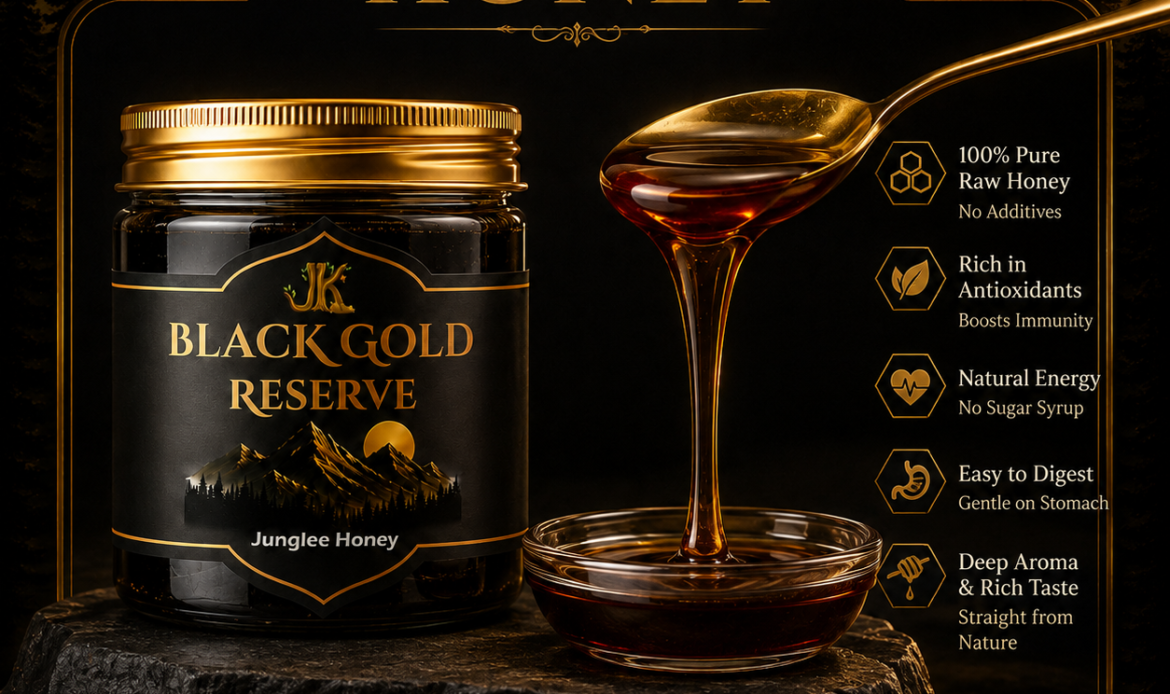
Black Gold Reserve - A Darkness That Heals
For millennia, honey has been cherished as nature’s golden elixir, a sweet reward from the diligent work of bees. Yet, not all honey is created equal. Beyond the familiar jars found on supermarket shelves lies a world of unparalleled richness and purity: premium forest honey, often hailed as “Black Gold Honey“ or “Black Gold Reserve”. This exceptional nectar, meticulously gathered by wild bees from the pristine, untouched forests of India and Nepal, offers a depth of flavor and a spectrum of health benefits that processed alternatives simply cannot match. Join us as we explore the captivating world of this natural treasure, understanding what makes it so unique and why it deserves a place in every health-conscious home.
Why Is Forest Honey Called “Black Gold”? The Sweet Secret of India & Nepal
Imagine bees foraging deep within ancient forests, far from agricultural pesticides and urban pollution. This is the origin of premium forest honey, a product of unparalleled purity and botanical diversity. In regions like Uttar Pradesh in India and the majestic Himalayas of Nepal, wild bees collect nectar from a vast array of wildflowers, medicinal plants, and centuries-old trees. This diverse floral source imbues the honey with a complex flavor profile and a rich nutritional density that sets it apart.
The term “Black Gold Honey” or “Black Gold Reserve” is often used to describe these darker, more potent varieties of forest honey, reflecting their deep amber to almost black color and their robust, earthy, and sometimes woody taste. This isn’t just a marketing term; it speaks to the honey’s exceptional quality and the arduous journey of its collection. Unlike honey from domesticated beehives that often feed on a limited range of crops, natural honey from forest ecosystems is a direct reflection of the wild biodiversity from which it originates.
Nepal, for instance, boasts an incredible range of elevations, from 70 to 4,200 meters, supporting an estimated 10,000 wildflower species, including 312 endemic to the region. This extraordinary biodiversity directly shapes the unique character of Nepali wild honey. Similarly, premium Indian honey harvested from deep forest zones, like the Himalayan jungle honey, is a living, bioactive, enzyme-rich creation from wild bees foraging across hundreds of medicinal wildflowers. This commitment to natural sourcing ensures that every spoonful of this pure forest honey is a taste of the wild itself, untainted and full of life.
You’ve Tasted Honey. But Have You Discovered the Wild?
The true magic of raw forest honey lies in its unprocessed nature. Unlike many commercial honeys that undergo pasteurization and ultra-filtration, raw forest honey retains all its vital nutrients, enzymes, antioxidants, and beneficial compounds. This minimal processing ensures that we receive honey as nature intended, packed with a plethora of health advantages.
Here’s why raw forest honey is considered a superior choice for wellness:
- Rich in Antioxidants: Forest honey is exceptionally rich in antioxidants, including flavonoids and phenolic acids. These powerful compounds protect our cells from oxidative damage caused by free radicals, which are linked to aging, cardiovascular disease, diabetes, and various chronic inflammatory conditions. Darker honeys, often referred to as Black Gold Honey, tend to have higher antioxidant content.
- Immunity Booster: The diverse pollen, natural enzymes, and antioxidants in forest honey actively support our immune system function. Regular consumption can help us fight infections and strengthen the body’s natural defenses.
- Natural Antibacterial and Antifungal Properties: Raw forest honey possesses natural antimicrobial qualities, making it effective against various bacteria and fungi. It has been traditionally used to treat minor wounds, burns, and skin infections.
- Supports Digestive Health: The live enzymes, amino acids, and organic acids in unprocessed forest honey facilitate clean, efficient digestion and support metabolism. It can help regulate gut health, reduce acidity, constipation, and bloating.
- Soothes Coughs and Sore Throats: Both the World Health Organization and the American Academy of Pediatrics recommend honey as a cough suppressant. Its antioxidant and antimicrobial properties help coat the throat and relieve irritation.
- Natural Energy Source: Forest honey provides sustained energy through its rich, complex sugar content (fructose and glucose) without the rapid spike and crash associated with refined sugars. It’s an excellent natural energy source for daily activities or pre/post-workout.
- Nutrient-Rich Profile: This natural honey from forest is particularly high in essential minerals such as potassium, calcium, magnesium, and iron, as well as vitamins C and B6. These are directly transferred from the mineral-rich forest soils and diverse vegetation the bees forage upon.
In essence, choosing raw forest honey is choosing a product that is not just sweet, but genuinely nourishing and vital for our overall well-being.
Is Your “Pure Honey” Really From the Forest? Meet JK Junglee Honey
When we seek premium Indian honey, we look for brands that uphold the highest standards of purity, ethical sourcing, and minimal processing. While specific details about jkjungleehoney were not available in our current data, a benchmark for a truly pure Indian forest honey brand, like what jkjungleehoney aspires to be, embodies several critical characteristics.
A leading brand in premium Indian honey would prioritize:
- Verified Wild Forest Ecosystems: Sourcing honey exclusively from deep, undisturbed forest zones in regions like Uttar Pradesh or the Himalayan foothills, ensuring bees forage away from agricultural chemicals and pollution.
- Raw and Unprocessed: Guaranteeing that the honey is never heated (pasteurized) or ultra-filtered. This preserves all the natural enzymes, antioxidants, vitamins, and minerals that define raw honey’s health benefits.
- Zero Adulteration: Committing to 100% pure honey with no added sugar syrups (like rice syrup, corn syrup, or invert sugar), artificial flavors, or preservatives. This is crucial given the widespread honey adulteration issues in India.
- Ethical and Sustainable Harvesting: Supporting tribal beekeepers and indigenous communities who use traditional, sustainable methods to harvest honey, ensuring the well-being of the bees and their forest habitats.
- Transparency and Traceability: Providing clear information about the honey’s origin, harvesting methods, and purity testing (ideally including advanced tests like Nuclear Magnetic Resonance or NMR, which is the international gold standard for purity).
- Natural Variation: Embracing the natural variations in color, aroma, and flavor that occur with seasonal changes and diverse floral sources. This inconsistency is a true mark of authentic, unblended natural honey from forest.
By adhering to these principles, a brand like jkjungleehoney would establish itself as a trusted source for consumers seeking the unparalleled quality of pure forest honey from India.
The Honey Label Can Fool You — Here’s How to Choose the Real Thing
In a market often flooded with adulterated products, discerning authentic premium forest honey can be challenging. A 2020 report by the Centre for Science and Environment (CSE) revealed that 77% of local honey samples tested in India were adulterated with sugar syrup, with many prominent brands failing purity tests. Therefore, it’s essential to be an informed consumer.
Here’s our guide to help you choose genuine raw forest honey:
- Read the Label Carefully: Always look for labels that explicitly state “raw,” “unprocessed,” or “natural honey.” Avoid products with added sugars, syrups, artificial flavors, or preservatives. A quality product should list only one ingredient: “honey.”
- Observe Consistency and Texture: Pure honey tends to be thick and flows slowly. If the honey runs too quickly, it might be diluted. Natural honey from forest may also have a slightly uneven or grainy texture due to minimal processing.
- Expect Natural Crystallization: Don’t be fooled into thinking crystallized honey is fake. Pure, raw forest honey naturally crystallizes over time due to its glucose content and temperature changes. In fact, consistent thinness might indicate heavy processing.
- Notice the Aroma and Taste: Authentic wild honey boasts a strong, complex floral aroma and a deep, natural taste that varies depending on the flowers the bees visited. It can be earthy, woody, slightly bitter, or have hints of caramel or toffee. Artificial or blended honey often smells overly sweet and lacks complexity.
- Perform Simple Home Tests (with caution):
- Water Dissolution Test: Pure honey, when dropped into a glass of water, will tend to settle at the bottom without immediately dissolving, whereas impure honey may dissolve quickly or form lumps.
- Thumb Test: A small drop of pure honey on your thumb will stay intact, while impure honey may spread or be absorbed.
- Note: While these tests can be indicative, modern adulterants are often engineered to bypass simple checks. Advanced lab tests like NMR are the most reliable.
- Choose Trusted Brands: Opt for reputable brands that provide transparency about their sourcing, harvesting, and processing methods. Look for certifications if available. Genuine premium Indian honey or pure forest honey from Nepal often comes from smaller, ethical producers.
- Consider the Price: Genuine, ethically sourced, and minimally processed raw forest honey cannot be produced and sold cheaply. If the price seems too good to be true, it likely is.
By following these guidelines, you can increase your chances of finding truly authentic Black Gold Honey and enjoy its myriad benefits.
Frequently Asked Questions (FAQ)
What is the difference between forest honey and regular honey?
Forest honey is harvested from wild bee hives in natural forest ecosystems, where bees collect nectar from a diverse range of wild flora. It is typically raw, unprocessed, and retains all its natural enzymes, antioxidants, and minerals. Regular, or commercial, honey is often produced from domesticated bees near agricultural fields, and it usually undergoes pasteurization (heating) and ultra-filtration, which strips away many of its beneficial compounds and pollen. Forest honey also tends to be darker, thicker, and has a more complex, earthy flavor.
Is raw forest honey healthier than regular honey?
Yes, raw forest honey is generally considered healthier than regular processed honey. It contains higher levels of natural antioxidants, enzymes, amino acids, and minerals because it is unheated and minimally filtered. Processing often destroys these beneficial components.
Why is it called “Black Gold Honey”?
The term “Black Gold Honey” is often used to describe premium, dark-colored forest honey due to its rich, deep hue and its exceptional value and potency. The darker color often indicates a higher concentration of beneficial antioxidants.
Does pure forest honey crystallize?
Yes, pure forest honey naturally crystallizes over time. This is a normal and often desirable characteristic, indicating its authenticity and raw state. Crystallization occurs due to the natural glucose content and temperature changes. If honey remains perpetually liquid and clear, it might have been heavily processed or adulterated.
How should I store raw forest honey?
Store raw forest honey in a tightly sealed glass container in a cool, dry place, away from direct sunlight and moisture. There’s no need to refrigerate it, as cold temperatures can accelerate crystallization. Properly stored, raw honey can maintain its quality for a very long time, even years.
Is honey from Uttar Pradesh and Nepal truly unique?
Yes, honey from these regions is often considered unique due to the rich biodiversity of their forest ecosystems. In Nepal, bees forage across a vast array of Himalayan wildflowers and medicinal plants, resulting in distinct flavors and potential medicinal properties. Similarly, forest honey from Indian regions like Uttar Pradesh, if sourced from undisturbed zones, benefits from diverse flora, contributing to its complex profile.
Conclusion: Not Every Golden Drop Deserves a Place in Your Kitchen
The journey from the untouched forests of India and Nepal to our tables, bringing us Black Gold Reserve or Black Gold Honey, is a testament to nature’s incredible bounty and the diligent work of wild bees. This premium forest honey is more than just a sweetener; it is a profound natural food, brimming with antioxidants, enzymes, and essential nutrients that support our health and well-being.
As the Indian honey market continues to grow, projected to reach INR 51.9 Billion by 2034 or INR 65.65 Billion by 2035, the demand for authentic, pure Indian honey and natural honey from forest will only intensify. By choosing brands committed to ethical sourcing, minimal processing, and verifiable purity, we not only safeguard our health but also support sustainable practices and the livelihoods of indigenous communities.
Let us embrace this golden elixir, incorporating raw forest honey into our daily lives for a healthier, more flavorful, and truly connected existence with nature. Its rich taste and remarkable benefits make it an indispensable addition to any health-conscious lifestyle.